
India has become a focus of private equity firms with deals worth more than $5.9bn this year, 50 per cent more than the total for all last year. Most of the leading firms have set up in India or are finalising plans to do so.

The Tamil Nadu government is set to unveil a housing initiative for 18,720 women employed by Taiwanese tech giant Foxconn, a key supplier to iPhone-maker Apple, this Saturday. The project, located at Vallam Vadagal near Chennai, marks the first time an Indian state government has constructed a hostel of this scale for a private firm - a model that's been successful in China and Vietnam.

With regulatory uncertainties clouding the future of online pharmacies, deals in the space are showing signs of slowdown, as also fresh investment from private-equity (PE) firms and venture capitalists (VCs). The data from Venture Intelligence shows so far in 2023 (as of June 13) there has been one deal with PE-VC funding. In 2022 there were four, a sharp fall from the 12, totalling $1,520 million, the sector had attracted in 2021.

'More than investors, fund houses, and advisors have raised caution and limited flows on small-and mid-caps.'

India has its share of both large tech companies and large national laboratories, but why is it that these don't seem to be at the forefront of any innovation news headlines? asks Ajit Balakrishnan.

Investments by private equity and venture capital funds declined by 44 per cent to $3.7 billion in February compared to the same period a year ago, a report said on Monday. The bets by the long-term investors were 13 per cent lower when compared to the investments in the preceding month of January, the report by industry lobby Indian Venture and Alternate Capital Association and consultancy firm EY, said. "...rising global recession concerns, increasing cost of capital and mismatch in valuation expectations between sellers and investors are turning out to be major impediments in the deployment of capital," EY's partner Vivek Soni said.

Government employees in Bangladesh locked down the main gate of the Bangladesh Secretariat in Dhaka, protesting a new service law that allows for easier dismissal of officials for misconduct. The protest, which lasted for about half an hour, disrupted government operations. The employees also threatened to continue their protests until the ordinance was scrapped. Meanwhile, the protest by employees of the Dhaka South City Corporation, demanding the installation of BNP leader Ishraque Hossain as its mayor, has brought administrative services to a halt. These protests, coupled with concerns raised by the business community and the military, highlight a growing sense of unease in Bangladesh over the policies of the interim government.

Chief Economic Advisor V Anantha Nageswaran on Thursday said the economy is expected to grow at 6.5 per cent in the current fiscal notwithstanding deficient rains in August. India recorded economic growth of 7.8 per cent in the April-June quarter of 2023-24 against 13.1 per cent in the year-ago period. India's economy in Q1 grew at the fastest pace in a year, on the shoulders of a boost in capital expenditure both at central and state levels, along with stronger consumption demand, especially in rural areas, and improved performance in the services sector, he said.
ICICI Bank has emerged as the single Indian entity considered worth investing by Libyan dictator Muammar Gaddafi and the investment has given an impressive return of over 25 per cent in past one year alone.

'We condemn recent illicit missile launches in the region that violate UN Security Council resolutions. We express serious concern over recent dangerous and aggressive actions in the maritime domain. We seek a region where no country dominates and no country is dominated one where all countries are free from coercion, and can exercise their agency to determine their futures,' the declaration said.

The government on Saturday announced a host of measures such as setting up of a new Fund of Funds Scheme (FFS) with Rs 10,000 crore corpus; and extension of period of incorporation by five years with a view to promote growth of budding entrepreneurs.

'It won't be a V-shaped recovery. It'll be consolidation.' 'Investors might exit during that grind. It'll be painful.'

Ola Electric, India's largest electric vehicle company, has achieved a significant milestone by becoming the first two-wheeler automotive electric vehicle (EV) manufacturer in India to receive incentives under the Production Linked Incentive (PLI) Scheme for Automotive and Auto Component (PLI-Auto Scheme). The company has been granted a total incentive of Rs 73.74 crore for the Determined Sales Value of FY 2023-24 under the scheme, according to a stock exchange filing by the company.

As the FM said, this is a Budget that lays the foundation for the next 25 years, observes Kumar Mangalam Birla.

Indian Railway Catering and Tourism Corporation (IRCTC) and Bharat Heavy Electricals (BHEL) are in talks for a partnership to run private trains. According to officials in the know, the two public sector undertakings (PSUs) are planning to form a special purpose vehicle (SPV) to run passenger trains on routes for which IRCTC has put in bids. "BHEL will be putting in the money required for private rail service, while IRCTC is going to focus on operational requirements," an official said. "IRCTC's business model has not been capital expenditure-focussed. It has built only operational enhancements," he added. Bids for public private partnerships (PPPs) in passenger train operations were opened last month.

The government on Wednesday approved 12 new industrial cities in 10 states on the lines of Greater Noida in Uttar Pradesh and Dholera in Gujarat to boost domestic manufacturing with an estimated investment of Rs 28,602 crore. These industrial areas will be in Khurpia in Uttarakhand, Rajpura-Patiala in Punjab, Dighi in Maharashtra, Palakkad in Kerala, Agra and Prayagraj in UP, Gaya in Bihar, Zaheerabad in Telangana, Orvakal and Kopparthy in AP, and Jodhpur-Pali in Rajasthan, and one in Haryana. A decision in this regard was taken in a meeting of the Cabinet Committee on Economic Affairs chaired by Prime Minister Narendra Modi.
Union Finance minister P Chidambaram on Saturday hit out at the government sector for being a 'net dis-saver' while calling for raising the savings-GDP ratio from the current 27 per cent to increase flow of domestic investment.
International Finance Corporation, the private sector financing arm of the World Bank Group, is likely to invest $500 million in India this fiscal. \n

'Every delay directly increases the cost burden on developers. Land holding charges, financing costs, and compliance expenses escalate as approvals drag on.'

The Planning Commission has projected that investment in infrastructure would almost double at $1025 billion in the 12th Plan, compared to $514 billion in the 11th Plan.

This period of strong growth not only offers opportunities but also calls for strategic considerations to ensure sustainable development and equitable prosperity in the years to come, suggests Sujan Hajra.

The commerce ministry is working on different scenarios to assess the possible fallout of reciprocal tariffs to be imposed by the US administration on April 2 on its key trading partners including India, sources said. US President Donald Trump has said that April 2 will be 'Liberation Day' as he plans to announce tariffs or import duties to bring down America's trade deficit, and promote the country's manufacturing.

The global realty consultant attributed the rise in PE investments to increased attraction of institutional investors towards leased income generating office buildings.
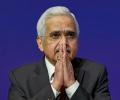
The highlights of RBI's bi-monthly monetary policy announced by Governor Shaktikanta Das:

For over a decade, HDFC Bank consistently outperformed industry growth rates in both deposits and advances, maintaining impeccable asset quality. Amid a landscape where other banks struggled with soaring non-performing assets (NPAs), HDFC Bank thrived, eventually surpassing ICICI Bank to become the largest private sector lender in India. Its net interest margin (NIM) remained stable in the range of 4.1-4.4 per cent.

Despite news of the private equity in the domestic healthcare and pharma industry touching almost Rs 40 crore (Rs 40 million) in the first nine months of the year, PE firms are not exactly bullish about investing in the pharma industry alone. In fact, a closer look at the investments reveals that a larger part of the money is being flown into healthcare delivery systems like hospital chains and not in pharma companies.

Pharma stocks have performed well after Budget
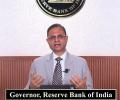
'India has the potential to grow at more than 7%, with the monetary policy providing a supportive hand.'

Ahmedabad-based Nirma group and leading private equity firms have joined the race to acquire BSE-listed Glenmark Life Sciences. The acquisition by chemicals-to-cement major Nirma, if successful, would be a major boost for the health-care segment of the group, on the lines of its successful entry into the cement sector following its purchase of Lafarge India's assets for about Rs 9,400 crore in July 2016. It later followed up by buying Emami cement assets for Rs 5,500 crore in February 2020.
Offering "huge scope" for foreign investments, Finance Minister Pranab Mukherjee on Friday said India needs about $1 trillion in next five years for infrastructure development, half of which has to come from the private sector.

World Bank president Ajay Banga is among the Indians who have made it to the prestigious Times's list of 100 most influential people in the world released on Wednesday. Time's profile of the former Mastercard CEO, written by US Treasury Secretary Janet Yellen, said, "It's not easy to find a leader with the skill and drive to take on the monumental task of transforming an essential institution, but since becoming World Bank president last June, Ajay Banga has done just that." She said Banga comes to the World Bank after leading a global organisation through which he brought millions of unbanked people into the digital economy.

With 7 per cent economic growth, India is not creating enough jobs as reflected by the number of applicants for vacant posts in some states, Reserve Bank's former governor Raghuram Rajan said and suggested the government needs to focus on promoting labour-intensive industries to generate employment. Rajan further said some Indians, especially those at upper level, are comfortable and have high incomes, but consumption growth from the lower half of the country has still not recovered to pre-pandemic level.

The total amount of money various entities have raised through the private placement route is at its lowest since 2014. They raised a total of Rs 1.96 trillion in the first five months of 2022, revealed the numbers from PRIME Database. It is down 23.4 per cent from the Rs 2.56 trillion raised in the corresponding period in 2021.

'There will be positive growth, but if you ask me whether we are going to have the original growth rate of 8%, the answer will be, no.'

'The finance minister missed yet another opportunity to simplify the income tax structure in the Budget.' 'This was an opportune moment to get rid of the old tax system entirely and move fully to the new system,' asserts M Govinda Rao, member of the 14th Finance Commission.

Chief of Defence Staff General Anil Chauhan emphasizes the importance of self-reliance in Unmanned Aerial Vehicles (UAVs) and Counter-Unmanned Aerial Systems (C-UAS) for India, citing recent global conflicts and Operation Sindoor as examples of their strategic importance.
